

Instagram · 9 min read
Instagram DM automation rules creators need in 2026
A practical guide to safe Instagram DM automation: who can be messaged, what opens a conversation, which shortcuts create risk and what to test.

Instagram automation becomes risky when the tool promises more than the platform allows. Cold blasts, hidden password collection and endless follow-ups may look like growth features in a sales demo, but they can turn a useful workflow into an account problem.
This guide gives creators a practical rulebook for 2026: which accounts and interactions can use official messaging tools, what a user-initiated conversation means, how to plan follow-ups and how to audit a provider before connecting it.
| Check | Safer pattern | Risk signal |
|---|---|---|
| Connection | Official Meta authorization | Tool asks for your Instagram password |
| Trigger | Person comments, replies or messages first | Unsolicited bulk outreach |
| First reply | Delivers the promised next step | Immediate unrelated sales sequence |
| Follow-up | Respects the active conversation window | Scheduled messages with no valid entry point |
| Control | Clear pause, disconnect and deletion paths | No visible way to stop automation |
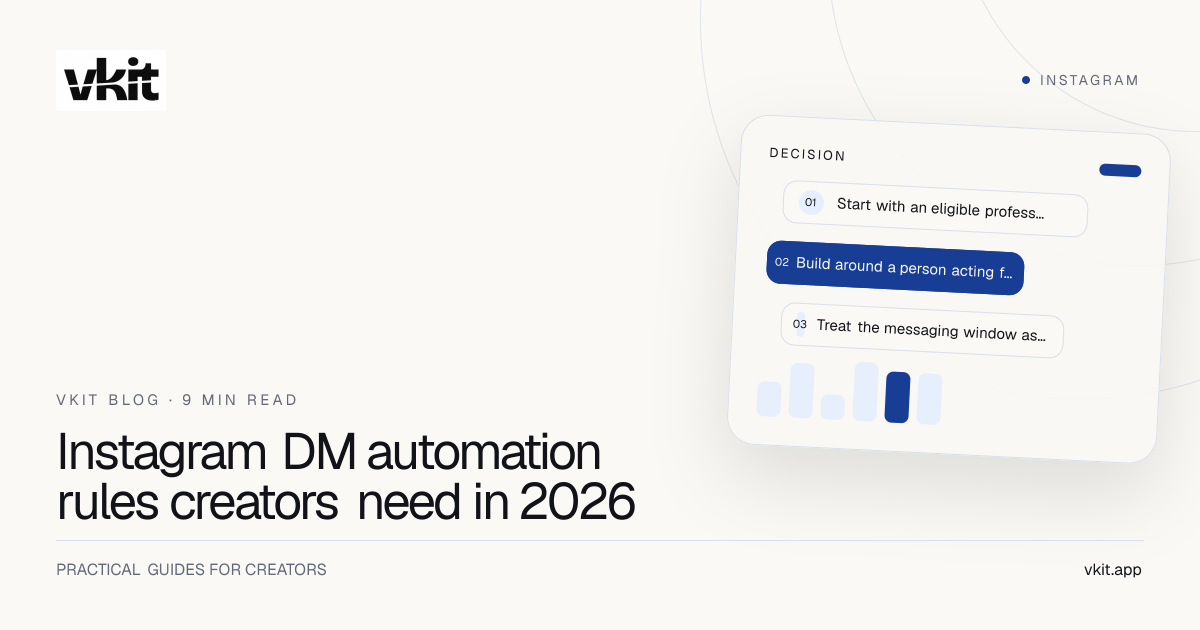
- 01Confirm an eligible trigger
- 02Deliver what was requested
- 03Stop when the window closes
Start with an eligible professional account
Meta’s Instagram APIs are built around professional accounts, which means Business and Creator accounts rather than ordinary consumer profiles. The exact setup can depend on which Instagram login model a provider uses, so follow the connection screen instead of assuming every account type has the same capabilities.
This distinction is not a marketing preference. Professional accounts expose the business permissions and webhooks that an approved tool needs to receive an event and respond through the official interface. If a service claims it can automate any personal account by taking your password, it is solving the eligibility problem in the wrong way.
Before building a campaign, connect the intended professional account, confirm the correct profile appears and run the provider’s own test flow. A safe test uses an account you control to create the real trigger, then verifies both the public and private experience.
Use the platform login.
The authorization screen should be hosted by Meta or Instagram and show which account and permissions are involved.
Check the connected identity.
Teams often manage several profiles. Confirm the automation is attached to the account and post you actually intend to use.
Test as an audience member.
Trigger the flow from a separate account so you see the same inbox, timing and wording a real person sees.
Build around a person acting first
The safest automation begins with intent. Someone comments the keyword you requested, replies to a story or sends a message. Their action gives the product a legitimate event to handle and gives you a clear reason for the response.
That does not make every follow-up appropriate. The reply should be connected to what the person did. If your reel promises a checklist, the private response should help them receive the checklist. Using that moment to start an unrelated sequence breaks the expectation even before it creates a policy question.
Comment-to-DM is especially effective because the promise is visible. The caption says what to comment and what will happen next. Our comment-to-DM setup guide walks through the campaign itself, while the AutoDM explainer shows the underlying handoff from comment to conversation.
If you cannot point to the person’s action and explain why the next message follows from it, do not automate the message.
Treat the messaging window as a boundary, not a growth hack
Meta’s messaging tools use conversation windows and entry-point rules to limit when automated replies can be sent. The commonly discussed 24-hour window is not permission to send anything for a day; it is a period for responding to the active conversation under the rules attached to that entry point.
Your provider should model the current platform behavior rather than relying on a screenshot from an old tutorial. Meta updates permission names, entry points and technical requirements. Some experiences can have different conditions, and a campaign should not assume that one interaction silently authorizes indefinite promotional messaging.
For creators, the practical approach is simple: deliver quickly, ask only the next useful question and keep any follow-up close to the request. When the valid window is over, stop. A system that queues a message should also know when the platform is no longer allowed to send it.
Deliver before you nurture.
Send the guide, code, link or answer first. The promised value is the reason the conversation exists.
Make the next step voluntary.
A useful reply, button or question lets the person choose whether the conversation should continue.
Let expired windows expire.
Do not use another tool or a disguised message type to force a promotional follow-up outside the permitted context.
The message still has to respect the person
Technical permission is only the floor. A message can be deliverable and still feel manipulative. Misleading buttons, fake urgency, repeated nudges and a first reply that hides the promised resource all teach people not to trust the next automation.
Write the flow as if you will personally read every reply. Use the language from the post. Identify what is being delivered. Keep the first message short enough to understand on a phone. If the person asks to stop, the flow should stop rather than debate them.
Volume also needs control. Viral content can create a sudden spike, and platforms apply technical rate and usage limits. A responsible provider queues work, records failures and communicates what happened. Unlimited pricing should describe the provider’s billing model, not pretend the underlying platform has no technical limits.
Audit the provider, not only the template
A polished template cannot make an unsafe connection safe. Ask how the tool signs in, which permission enables the feature and whether the provider uses Meta’s official platform. Look for a public privacy policy, a data-deletion process and support that can explain an account-specific failure.
Then ask what the product refuses to do. Refusing cold outreach, refusing password scraping and refusing to send after an eligible interaction has expired are positive product decisions. A platform guardrail is useful even when a competitor advertises its absence as flexibility.
Finally, look at your own operations. Name the person who owns each automation, review live rules regularly and remove campaigns that no longer match the post. The safest old automation is the one that was deleted when its promise stopped being current.
Connection audit.
Confirm official authorization, narrow permissions and a clear reconnection path when access expires.
Campaign audit.
Read the trigger and reply together, test every destination and check that the offer still exists.
Data audit.
Know what the provider retains, how to request deletion and what happens after an account is disconnected.
Run this five-minute preflight before every launch
Open the post as a stranger. Is the call to action clear about the keyword and the delivery? Comment it from a test account. Check the public reply, the private message, every button and the final page. Then test a typo, a repeat comment and a person who does not take the next step.
Review the automation settings beside the actual caption rather than from memory. Confirm the correct account and post, remove draft copy, and decide what happens when delivery fails. Save a screenshot or short recording of the final working path so support has evidence if behavior changes later.
Rules sound restrictive when they are separated from their purpose. In practice, they produce a better campaign: the right person triggers it, receives what was promised and decides whether to continue. That is the experience worth scaling.
Frequently asked questions
Can I automatically DM anyone who follows my Instagram account?
Do not treat a follow as permission for unsolicited automated outreach. Safer official workflows begin when the person comments, replies or messages through an eligible entry point and the response relates to that action.
What is the Instagram 24-hour messaging window?
It is a commonly used term for the period in which a business can respond within an active conversation under Meta’s messaging rules. Exact eligibility can depend on the entry point and current platform documentation.
Are Instagram comment-to-DM automations allowed?
Instagram supports official messaging workflows for professional accounts when they use eligible triggers, approved permissions and compliant message behavior. The tool and campaign must still follow Meta’s current technical and policy requirements.
Will Instagram ban my account for using AutoDM?
Automation itself is not a promise of safety or a reason for automatic punishment. Risk depends on the connection method and behavior. Use official APIs, respond to real user actions and avoid unsolicited or deceptive messaging.
Scale the response, keep the consent visible.
The strongest automation rule is easy to explain: a person asked, the message delivered what they asked for, and they controlled what happened next. Build that experience before you build a bigger sequence.
Put it into practice