

Instagram · 12 min read
Instagram automation compliance checklist for creators
A practical checklist for official API access, consent, comment-to-DM triggers, privacy, retention, access controls, errors and truthful creator campaigns.

Instagram automation should make a user-requested action reliable, not create unsolicited outreach. A compliant campaign has a clear trigger, a predictable response, a legitimate purpose and an operator who can explain the data path.
This checklist is operational guidance, not legal advice or a guarantee of Meta approval. Platform policies and permission requirements can change. Confirm current Meta developer documentation and obtain professional advice for the jurisdictions and data you handle.
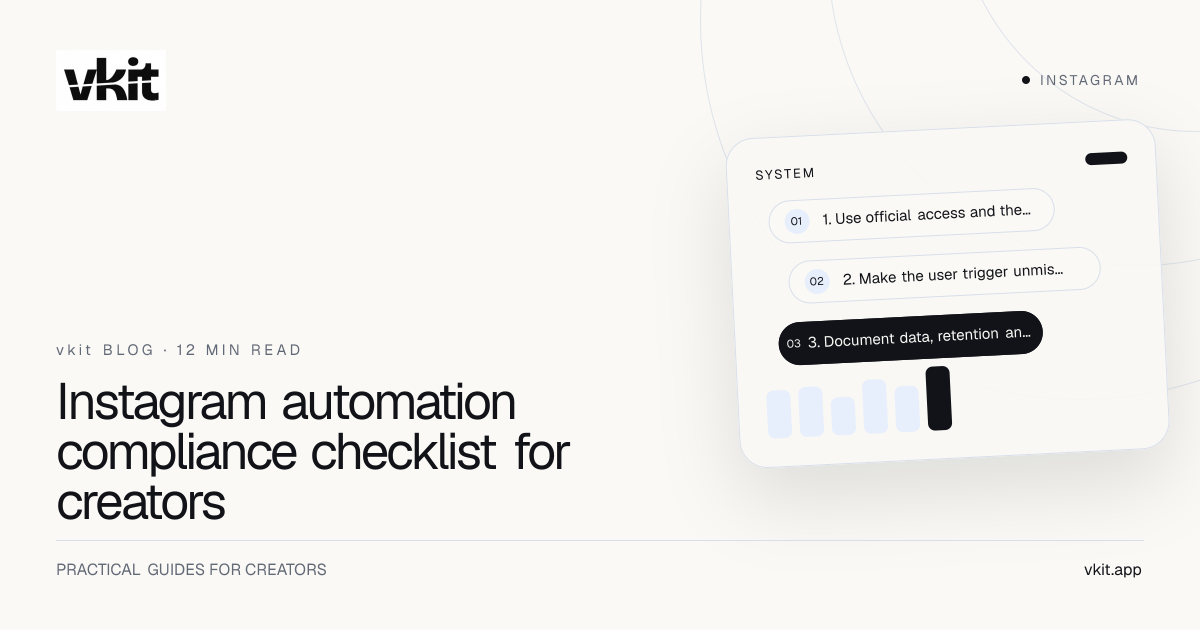
- 011. Use official access and the minimum permissions
- 022. Make the user trigger unmistakable
- 033. Document data, retention and deletion
1. Use official access and the minimum permissions
Connect through the official Meta authorization flow. Never ask a creator to hand over an Instagram password or session cookie. The user should see the account and requested access during OAuth and be able to disconnect it.
Request only the permissions required for the visible feature. Explain each permission in plain language in the product, reviewer instructions and privacy policy. A publishing permission should map to a discoverable scheduling or publish action.
Read what Meta Tech Provider means for the distinction between infrastructure status and endorsement.
Official OAuth
The creator grants access through Meta rather than sharing credentials.
Least privilege
Every requested permission has a current, visible product use.
Revocation
The creator can disconnect and knows how to request deletion.
2. Make the user trigger unmistakable
For comment-to-DM, tell the audience what keyword or action will produce the message and what the message contains. The recipient should never need to guess why it arrived.
Do not scrape audiences, buy lists or message people simply because they followed, viewed or matched a demographic. Build automation around a qualifying comment, incoming message or other platform-supported user action.
The initial private reply is separate from later conversation permissions: sending it or opening its website link does not itself allow an automated sequence. The Instagram automation rules guide explains what must happen before follow-ups. Keep a record of the campaign copy and configured rule.
Specific invitation
State the word to comment and the resource or response promised.
Expected reply
The first DM fulfills the request before it promotes anything else.
No surprise outreach
Choose a rule that responds to the stated user request rather than treating a view or profile visit as permission.
3. Document data, retention and deletion
Map the account identifiers, comments, messages, media, captions, schedules and result metadata processed by the feature. State why each category is used, where it is stored and who can access it.
Publish a privacy policy that matches the product, not an aspirational future architecture. Define retention rules the system and team can actually enforce. Provide a clear deletion route for connected data, scheduled content and media containers.
Limit logs and support exports to the minimum information needed. Redact tokens and secrets from screenshots, tickets and analytics. Rotate credentials after any suspected exposure.
4. Validate content and handle platform errors
Validate supported media type, aspect ratio, duration, file size, caption and destination before requesting publication. Show the creator which account and scheduled time will be used.
Poll asynchronous media containers according to the official flow and stop on terminal failure. Translate rate limits, expired authorization and publishing-limit errors into actionable messages instead of a generic failure.
Require explicit creator direction for every scheduled item. Preserve an audit trail of who created, changed, approved and published the content where team access exists.
Preflight
Catch media and caption problems before the platform request.
Clear status
Queued, processing, published and failed are distinct visible states.
Safe retry
Retries do not create duplicate posts or bypass a limit.
5. Run a pre-launch and monthly audit
Test with a clean account from connection through trigger, response, destination, disconnect and deletion request. Record the exact reviewer path with readable UI and no hidden setup assumptions.
Review permissions, privacy wording, retention operations, campaign templates, support macros and recent errors every month. Recheck after any Meta policy, permission or product-flow change.
Use Auto DM troubleshooting for the operational checks. Escalate uncertain legal or platform-policy questions before launching the campaign.
Compliance is a repeatable product operation, not a paragraph added the night before review.
Operational note
Assign an owner for authorization failures, platform limits, deletion requests and recipient complaints. Test clean OAuth, expected permissions and actual error paths. Review logs for unexpected retries without exposing message content. When a policy changes, pause the affected workflow until the team has tested behavior and updated public documentation. A campaign is ready only when its normal, failure and deletion paths are understandable to someone who did not build it. Record the review date and owner.
Frequently asked questions
Is Instagram automation allowed?
Certain workflows are allowed through official Meta APIs and approved permissions. The exact feature, account type, trigger and message window must follow current platform rules.
Can I send a DM to everyone who views a post?
Do not infer consent from passive viewing. Use a supported user-initiated action such as the specific comment or incoming message described in the campaign.
Does Meta Tech Provider status mean Meta endorses vkit?
No. It describes a technical relationship or designation and must not be presented as Meta endorsement or approval of every campaign.
How often should creators review automation compliance?
Before every new workflow, after policy or product changes, and through a regular monthly operational review.
Sources and verification
Product details and prices change. We checked these primary sources on the dates shown.
Build automation a reviewer, creator and recipient can all explain.
Use official access, specific triggers, truthful data practices and visible error handling. vkit is designed around user-directed creator workflows, and every campaign operator still owns the content and configuration they publish.
Put it into practice