

Instagram · 9 min read
How to write an Instagram bio that earns the next click
Write an Instagram bio that explains who you help, gives visitors a reason to stay and connects the profile promise to one clear next step.

An Instagram bio has to orient a new visitor in a few seconds. Most weak bios spend that space on broad labels, decorative phrases and several competing calls to action, leaving the person unsure whether the account is relevant.
This guide gives the bio four jobs: identify the person, name the audience outcome, provide a reason to believe and make one next step clear. It also shows how to use an Instagram bio generator as a drafting aid without publishing generic language.
| Line | Question it answers | Example function |
|---|---|---|
| Identity | Who is this? | Role, subject or recognizable name |
| Outcome | Why should I stay? | The useful change or problem the account covers |
| Proof | Why believe it? | Specific experience, work or evidence |
| Action | What should I do now? | One invitation that matches the active destination |
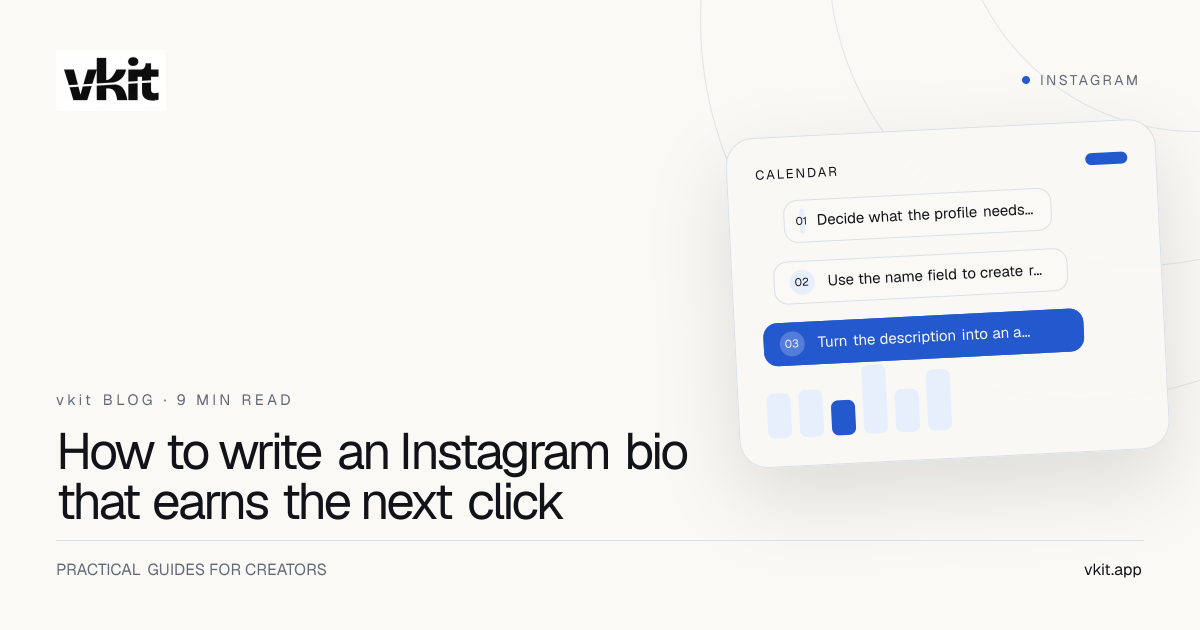
- 01Decide what the profile needs to do
- 02Use the name field to create recognition
- 03Turn the description into an audience outcome
Decide what the profile needs to do
A creator launching a course needs a different bio from a photographer seeking enquiries or an educator building a newsletter. Choose the primary visitor and the most useful next action for the current season. The bio cannot prioritize every offer equally.
Review the posts that bring profile visits. The words and promise in the bio should continue that experience. When a Reel teaches beginner budgeting but the profile only describes the creator as a lifestyle enthusiast, the visitor has to reconstruct the relevance alone.
Write the job in one sentence: help first-time visitors understand the subject and start with the free planning guide. That sentence becomes the standard for every line you keep or remove.
Audience
The person most likely to benefit from the account and recognize the problem.
Outcome
The practical change, understanding or experience the content repeatedly supports.
Action
The one next step that matters now, such as a guide, enquiry, event or offer.
Use the name field to create recognition
Keep the creator or business name recognizable, then use any remaining space to clarify the subject when that helps discovery. A name field full of slogans is hard to scan, while a subject-only label can make the account feel anonymous.
Choose words the audience naturally uses. If people ask for Instagram Auto DM, replacing it with an invented category phrase creates unnecessary distance. Clarity in the profile is more valuable than sounding unlike every search result.
Avoid changing the name repeatedly for small campaigns. The profile should remain identifiable when a post is shared, saved or revisited after the promotion ends.
Turn the description into an audience outcome
A list such as creator, speaker, coach and entrepreneur tells the visitor what the account owner calls themselves. It does not explain what the visitor will learn, see or accomplish. Translate the role into the recurring value of the content.
Use a concrete verb and subject: plan a week of useful content, photograph products in natural light or build a calmer freelance pipeline. Remove words that make the sentence feel impressive without making it more specific.
The consistent brand voice guide helps align the wording with the rest of the account. The bio can be concise while still sounding like the person behind the work.
A visitor should understand the account before they have to admire the writing.
Add proof that can survive a closer look
Proof may be years of experience, a specific body of work, a relevant credential, a recognizable publication or the number of resources completed. Use only evidence that is accurate, current and meaningful to the promise above it.
Follower count is not the default proof. A specialist with a small, relevant audience may be better served by naming the kind of clients, projects or results they understand. Avoid a claim that needs several qualifiers the bio cannot fit.
If the account is new, show the work rather than inventing authority. A clear specialty, documented process and useful pinned post can create more confidence than an empty superlative.
Make the final line match the destination
The call to action should name what happens after the click. Get the weekly brief, view the current collection or request the pricing guide is clearer than learn more. Update the bio when the active destination changes.
The destination must keep the same promise above the fold. If the bio offers a checklist, the page should name that checklist before presenting unrelated products or social links. The link-in-bio field guide explains how to preserve this hierarchy.
Use one primary action even when the landing page contains several links. The profile sends the visitor with one reason to click; the page can provide secondary paths after fulfilling that reason.
Use a bio generator for options, then edit like a human
Give the generator real inputs: audience, recurring problem, desired outcome, proof and current action. Generic inputs produce generic bios. Ask for several structures rather than several versions of the same adjective-heavy sentence.
Keep the lines that make the account easier to understand and remove invented confidence, unsupported proof or language you would never say. Read the result beside recent captions; the profile and content should feel like the same creator.
Create two materially different versions and run each long enough to observe profile actions. Track the active bio, destination and campaign so a change in clicks is not misattributed to wording when the traffic source also changed. The link-in-bio analytics guide provides a practical measurement framework.
Frequently asked questions
What should I put in my Instagram bio?
Include a recognizable identity, the useful outcome your account provides, relevant proof and one clear next action that matches the destination linked from the profile.
How do I make my Instagram bio stand out?
Use specific audience language and a credible point of view rather than decorative symbols or vague superlatives. Clarity and fit make a profile more memorable than novelty alone.
Should I use keywords in my Instagram bio?
Use natural words that accurately describe the subject and match how the intended audience talks about it. Do not repeat phrases or sacrifice readability to fit more keywords.
Can an Instagram bio generator write the final bio?
A generator can create useful structures and alternatives, but the creator should verify every claim, remove generic language and make sure the result matches the actual content and destination.
Make the profile promise easy to understand.
Use vkit’s free Instagram bio generator to explore clear structures, then edit the strongest version around your real audience, proof and next step. Connect that promise to a focused creator page so the visitor experiences one continuous journey from post to profile to action.
Put it into practice