

Instagram · 9 min read
Instagram Auto DM for coaches: a practical funnel
Build a coach-friendly Instagram Auto DM funnel that delivers the promised resource, qualifies genuine interest and protects the human conversation.

A coach does not need more anonymous leads. The useful outcome is a smaller number of people who understand the offer, receive something valuable and choose a sensible next step. Instagram Auto DM can shorten that path when the public promise and private reply are specific.
The system should never pretend an automated message is a coaching relationship. It should handle the repeatable handoff—delivering a worksheet, sending event details or collecting a simple choice—so the coach can spend time on the conversation that requires judgment.
| Stage | Job | Useful measure |
|---|---|---|
| Public post | Make one clear promise | Qualified comments |
| First DM | Deliver exactly what was promised | Successful delivery |
| Qualification | Ask one easy relevant question | Meaningful replies |
| Human handoff | Move genuine interest to the right next step | Booked or completed actions |
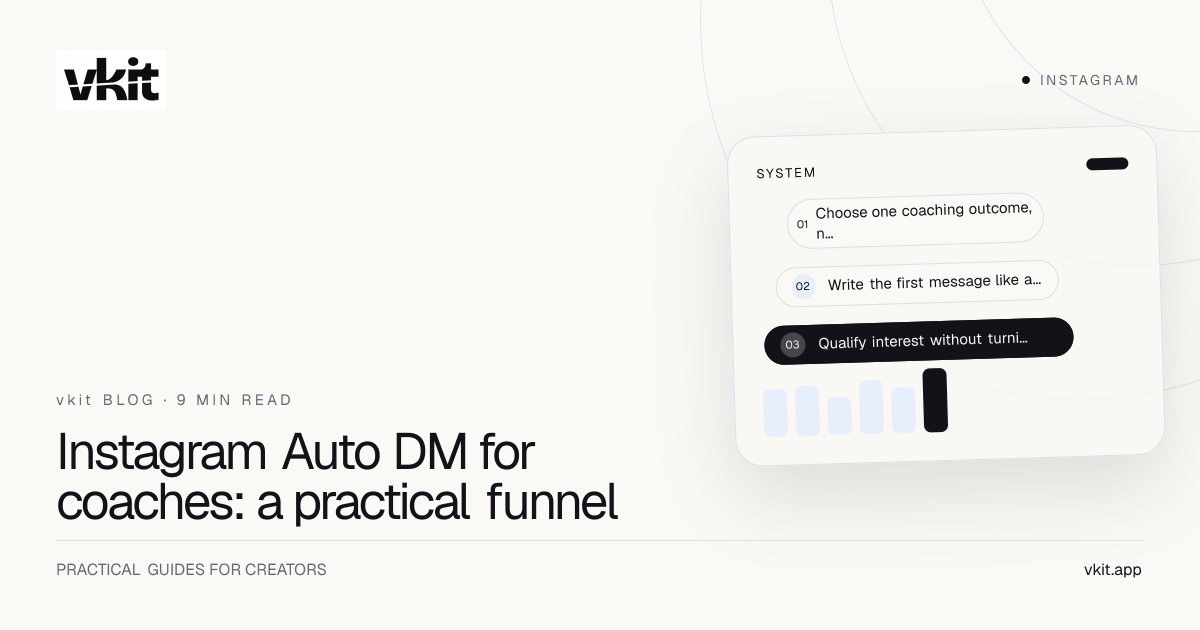
- 01Choose one coaching outcome, not a vague keyword
- 02Write the first message like a useful handoff
- 03Qualify interest without turning the DM into a form
Choose one coaching outcome, not a vague keyword
Start with a problem the audience can recognize today. A career coach might offer a five-minute interview checklist; a fitness coach might share a weekly planning sheet; a business coach might send a pricing review prompt. The resource should solve a small part of the problem without implying that a template can replace individualized advice.
The post needs a precise invitation. State what the person will receive, how to request it and whether a follow-up question will appear. ‘Comment PLAN for the weekly planning worksheet’ sets a clearer expectation than ‘Comment YES if you want to transform your life.’ The first creates informed intent; the second creates clicks the coach still has to interpret.
Connect one keyword to one active post during the first test. It becomes much easier to diagnose a missed trigger, measure the response and improve the promise. The Instagram comment-to-DM setup guide explains the mechanics before a campaign goes live.
Specific resource
A checklist, prompt, calendar or short diagnostic with a named result.
Clear trigger
One memorable word that matches the public call to action.
Honest next step
A reply, application, booking page or invitation that fits the promise.
Write the first message like a useful handoff
Open by naming the resource and the context. Someone may read the DM hours after commenting, so ‘Here is the interview checklist you asked for’ works better than ‘Here you go!’ Put the promised link or instruction before any qualification. Delivery is the reason the conversation exists.
Include at most one optional question in the same message as the promised resource. Ask which stage they are at, what type of support they are exploring or which version of the problem applies. The answer should help the coach route the person, not simply create engagement. Avoid collecting sensitive health, financial or employment details through an automated exchange.
Give the person a graceful way to stop. A simple line such as ‘No reply needed—use the guide whenever it helps’ reduces pressure. If a recipient asks not to receive more messages, stop the workflow for that person and respect the request. The Instagram automation compliance guide gives the operating checklist.
Automation should deliver the repeatable promise. Coaching begins where context and judgment matter.
Qualify interest without turning the DM into a form
A sequence of six questions feels like an application hidden inside Instagram. Ask the smallest question that changes the next response. A coach with two programs could ask whether the person needs a self-paced resource or personal support. A cohort launch could ask whether they want the curriculum or the next start date.
After the person replies, use their answer to offer one relevant route within the applicable messaging window. A person asking for a free checklist may not be ready for a sales call. Give them the checklist, a useful explanation and permission to choose the next step. When someone explicitly asks about coaching, make the application or booking link easy to find and explain what happens after they submit.
Keep human review close to high-intent replies. Auto DM delivers the configured resource; the coach should read the response and answer nuanced questions about suitability, outcomes, availability and boundaries. An initial private reply or website-link click does not itself permit an automated follow-up sequence. Check the Instagram messaging rules before adding another message.
Use campaigns that fit a coaching business
For evergreen discovery, attach the workflow to a strong educational post and refresh it when the resource changes. For a launch, connect a post to the waitlist, workshop or cohort details, then turn the automation off when registration closes. For live events, include the time zone, joining method and exact date in both the public post and private message.
A testimonial post can invite people to request the process behind the result, but it should not imply that every reader will achieve the same outcome. A frequently asked question can trigger a decision guide that explains who the offer is and is not for. A story response can open a lighter conversation when the platform and account support that trigger.
Build a simple campaign record: post URL, keyword, promised asset, active dates, owner and next step. This prevents an old post from continuing to send an expired booking link. The record also makes support faster because the team can identify exactly which workflow produced a message.
Measure the business result after the DM
Comment volume is a signal, not the outcome. Track successful delivery, replies to the qualifying question, clicks to the intended page, completed applications and booked conversations. Compare those numbers with the public promise so you can tell whether the problem is reach, relevance, delivery or the offer itself.
Review message quality as well as totals. Read a sample of conversations and note where people become confused, ask the same question or stop. Rewrite the public call to action before adding more follow-ups. A clearer promise often improves the funnel more than a longer sequence.
vkit brings Auto DM into the same creator system as planning, publishing, Link in Bio and Forms, and Brand Kit. That matters for a small coaching business because the campaign can move from idea to post to conversation without paying for a separate tool at every handoff. Check the current plan, test one real workflow and keep the human response at the centre.
Frequently asked questions
Can coaches use Instagram Auto DM for lead generation?
Yes, when the workflow responds to an action a person takes, delivers the stated resource and offers a relevant next step. Coaches should still follow Meta policies and applicable marketing, privacy and professional rules.
What should a coach send in the first Auto DM?
Send the exact resource or information promised in the public post, identify the context and ask at most one useful routing question.
Should Auto DM book coaching calls automatically?
It can provide a booking or application link after relevant interest, but suitability questions and individualized claims should remain with a person.
Build the handoff, then show up as the coach.
Start vkit free with one useful resource, one comment keyword and one honest next step. Let the automation handle delivery while you protect the conversation that creates trust.
Put it into practice