

Instagram · 9 min read
Instagram Auto DM for selling digital products
Use comment-to-DM automation to move digital-product interest from an Instagram post to the right sample, product page and purchase decision.

Digital products are easy to deliver and surprisingly hard to explain in a crowded feed. A comment-to-DM campaign can move someone from a short public hook to the detail they need without forcing the caption to carry the whole sales page.
The automation works when it continues a request the person made. It should send the promised sample, guide or product information first, then create a clear route to evaluate the paid offer. It should not manufacture urgency or hide the price until after a long sequence.
| Campaign | First value | Next step |
|---|---|---|
| Template preview | A real page or example | See full product details |
| Mini lesson | One useful method | Explore the complete course |
| Buyer guide | Fit and use cases | Choose the right version |
| Launch alert | Date, price and availability | Join the waitlist or buy |
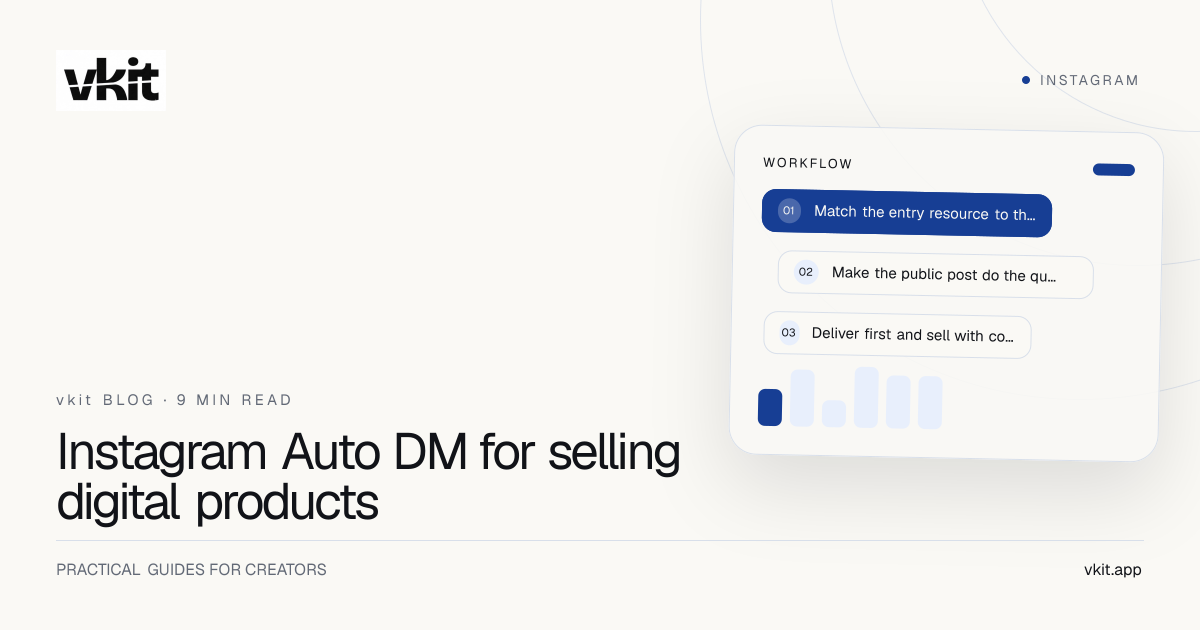
- 01Match the entry resource to the paid product
- 02Make the public post do the qualifying
- 03Deliver first and sell with context
Match the entry resource to the paid product
Choose a free sample that demonstrates the way the product creates value. A Notion system might share one usable database view. A course might offer a short lesson and exercise. A prompt pack might reveal a small themed set with instructions. The preview should be useful on its own and naturally make the complete product easier to understand.
Avoid the bait-and-switch pattern in which the post promises a template but the DM sends only a link to a checkout page. Name what is free and what is paid. If the sample requires an email address, explain that before the form and separate delivery consent from optional marketing consent.
The lead magnet guide helps define the free outcome. For a product sold through the creator page, the digital-product link-in-bio guide explains how the destination should present price, fit and fulfilment.
Demonstrate
Let the sample show the product’s method or quality.
Disclose
State whether the next page is free, paid or requires an email.
Direct
Give one next action that matches the visitor’s current intent.
Make the public post do the qualifying
A strong post names the audience, problem and outcome before asking for a keyword. ‘Comment KIT for the three-page launch checklist’ attracts more useful intent than ‘Comment INFO.’ The keyword is only the trigger; the promise creates the quality of the conversation.
Show the product in use. Walk through a page, show the before-and-after workflow, answer an objection or explain who should not buy it. This makes the DM a continuation of evidence rather than the first place the audience learns what the offer is.
Use a keyword that is short, easy to spell and unique enough to avoid accidental triggers. Put the instruction on screen and in the caption. Test the exact capitalization and comment flow from an account outside the team before launch.
Deliver first and sell with context
The first message should identify the post and provide the promised item immediately. Follow with one sentence connecting the sample to the paid product. A buyer should understand the relationship without reading a sequence of teaser messages.
Offer a choice when there are genuinely different paths: ‘Do you want the beginner setup or the advanced workflow?’ If the person replies, a human can choose the relevant next response, or you can use a supported rule within the permitted messaging window. A click to a website alone does not authorise another automated DM. Do not use artificial choices that both lead to the same aggressive pitch.
Include price before the buyer is asked to commit significant time or personal information. Explain the format, access period, required software, refund terms and support path on the product page. Auto DM can deliver attention; the destination has to earn the purchase.
Separate launch campaigns from evergreen discovery
A launch automation needs active dates, time zone, price changes and a named owner. Update the reply when bonuses expire and turn the workflow off when the doors close. An old Reel can keep collecting comments long after the launch, so the expired state needs its own helpful message.
An evergreen workflow should use stable assets and links. Review it monthly for broken destinations, old screenshots and claims that no longer match the product. Keep a version note in the campaign record so a support teammate can tell which message a buyer received.
Use different posts for different buying questions. One may demonstrate the outcome, another may address fit and a third may answer implementation concerns. They can share a product destination while using a first reply that matches the context of each post.
Measure revenue without losing the conversation
Use distinct campaign links or UTM parameters so product-page sessions can be tied to a post and keyword. Compare the available Auto DM activity with your destination analytics and checkout records: comments, successful deliveries, link visits, checkout starts, purchases and support requests. These may live in separate systems rather than one vkit report. The gaps between those steps show where the campaign needs work.
Do not judge the post only by purchases. A high comment-to-delivery rate with low clicks suggests the free resource or transition is weak. Strong clicks with low checkout completion may point to price, trust, product-page clarity or payment friction. Repeated pre-purchase questions belong on the destination page.
vkit combines Instagram Auto DM with content planning, publishing, Link in Bio and Forms, and Brand Kit. For a digital-product creator, that replaces several handoffs around the sale while keeping the product checkout and fulfilment in the appropriate system. Review vkit pricing, run one small campaign and compare the complete stack cost rather than a single feature.
Frequently asked questions
Can Auto DM sell a digital product directly?
Auto DM can deliver product information and a purchase link after a person requests it. The checkout, terms, payment and fulfilment should be handled on a secure destination designed for the product.
What keyword should I use for a digital-product campaign?
Use a short word connected to the promised sample or outcome, such as KIT, PLAN or GUIDE, and test it on the exact post before launch.
Should the first DM include the product price?
The first DM should deliver what was promised. If it immediately presents a paid offer, identify that clearly and make the price easy to find before the person is asked to proceed.
Turn interest into a clear product decision.
Start vkit free, choose one useful sample and build the shortest honest path from the comment to the product page. The best automation removes friction without hiding the offer.
Put it into practice